
HORIZONTAL IMPACT CRUSHERS
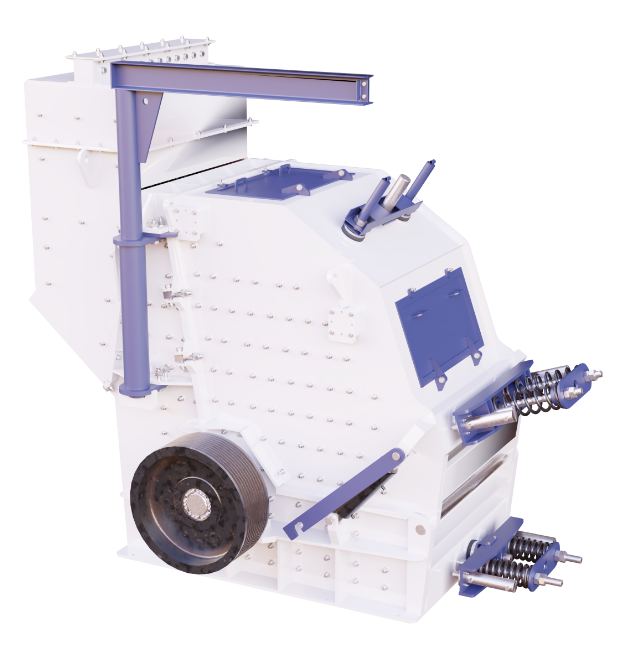
Built for Product Shape — Not Just Reduction
Secondary HSI duty demands consistent product shape, controlled gradation, and repeatable performance across shifting feed conditions. These machines are engineered for exactly that — not adapted from a primary platform with a smaller motor.
Certified Metallurgy
All major components produced from certified high-strength alloy steels with verified heat-treatment and microstructure documentation. You know exactly what you're getting — and so do we.
Three Adjustable Curtains
Three curtains give operators precise, repeatable control over product size and gradation. Adjust on the fly to changing feed hardness and production targets — without stopping the machine or shimming by hand.
4-Bar and 2-Bar Rotor Configurations
Standard 4-bar rotor with reversible blow bars. 2-bar setup with 2 dummy bars available where feed size or abrasion index requires it. Both configurations use the proven blow bar locking device — no improvised wedges.
Hydraulic Clam Shell with Safety Catch Arm
Full chamber access via hydraulic clam shell. Safety catch arm holds the housing open during service — no chain hoists, no secondary rigging, no excuses for skipping maintenance.
Tramp Iron Protection
Tramp iron safety springs on curtains two and three protect the frame from uncrushable material events — keeping unplanned downtime where it belongs: off your schedule.
Blow Bar Metallurgy Options
Certified manganese — standard
High chrome — abrasive secondary feed
Ceramic composite — high-silica applications
Chromium tungsten carbide — severe abrasion duty
Bimetallic — carbide outer with manganese inner
Blow Bar Removal Tool
Standard on every machine. No improvised tooling, no borrowed equipment from another crew — blow bar changes happen on your schedule with equipment that's already there.
Models
Five models from 110 to 670 stph — inlet openings 41×31.5 in to 80×38.6 in, power 200 to 600 hp. Contact us for sizing assistance.
4th-Generation Design
Four generations of field refinement — not a machine that got to market fast and is still being debugged. Safer design, better wear steels, and a rotor geometry proven across a wide range of abrasive and soft feed applications.
Certified Metallurgy
All major components produced from certified high-strength alloy steels with verified heat-treatment and microstructure documentation. You know exactly what you're getting — and so do we.
Two Curtains Standard — Third Available
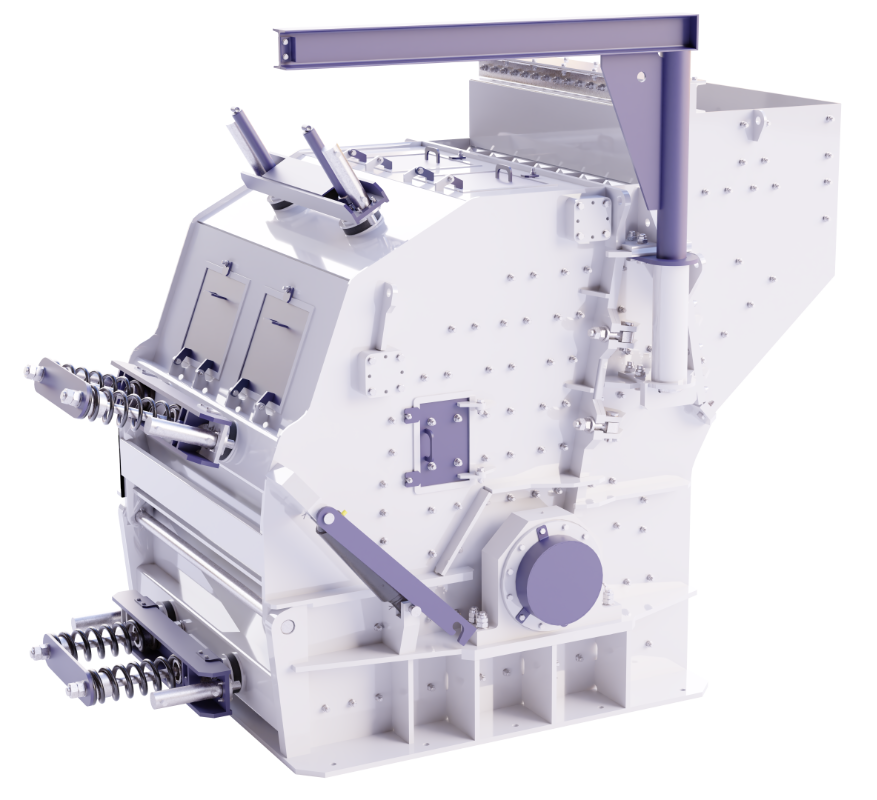
Two adjustable curtains are standard. A third curtain is optionally available for secondary-style applications — giving operators precise product control at the primary stage without adding a second machine.
4-Bar and 2-Bar Rotor Configurations
Standard 4-bar rotor with reversible blow bars. 2-bar setup with 2 stub bars available for high-abrasion or coarse-feed applications. Field-changeable without pulling the rotor shaft.
Hydraulic Clam Shell with Safety Catch Arm
Full chamber access via hydraulic clam shell — no chain hoists, no improvised rigging. Safety catch arm holds the housing open during blow bar changes. This is how maintenance should work.
Tramp Iron Protection
Tramp iron safety spring standard on curtain two and the optional third curtain. Protects the frame from uncrushable tramp events without operator intervention or machine shutdown.
Integral Jib Crane and Blow Bar Removal Tool
Standard on every machine. Blow bar changes don't require a mobile crane or an extra crew — the tooling is already there.
Blow Bar Metallurgy Options
Certified manganese — standard
High chrome — abrasive feed
Ceramic composite — high-silica and recycled material
Chromium tungsten carbide — severe abrasion
Bimetallic — carbide outer with manganese inner
Application Setups
High-abrasion: gravel, cement slag, furnace waste, glass, and recycled concrete. Light to medium silica: limestone, shale, and coal. Same machine, different blow bar and curtain configuration.
Models
Five models from 170 to 1,000 stph — inlet openings 41×35 in to 80×63 in, power 200 to 600 hp. Contact us for sizing assistance.
PRIMARY IMPACT CRUSHERS
TERTIARY IMPACT CRUSHERS
Final-Stage Shaping — Where Spec Is Everything
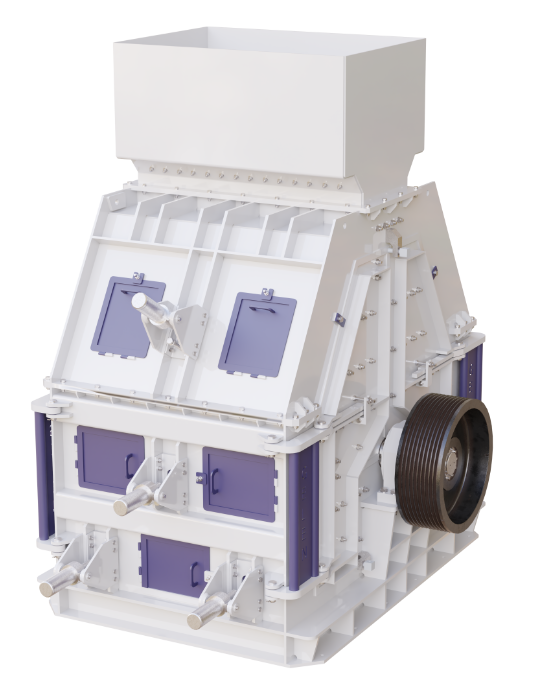
Tertiary duty means the product coming off this machine goes to asphalt, concrete, or spec sand — where cubicity, fines content, and gradation control are non-negotiable. These machines are purpose-built for that job, not down-rated from a secondary frame.
Certified Metallurgy
All major components produced from certified high-strength alloy steels with verified heat-treatment and microstructure documentation. You know exactly what you're getting — and so do we.
4-Bar Rotor — Optimized for Crushed Sand
4-bar rotor configuration with reversible blow bars is standard, optimized for the fine-feed tertiary and sand-shaping duty cycle. Reversible blow bars double usable wear life per set — lowering cost per ton at the back end of the circuit where margins are tightest.
Hydraulic Clam Shell with Safety Catch Arm
Full chamber access via hydraulic clam shell with safety catch arm. Tertiary machines run the highest blow bar turnover rate of any crusher position — chamber access that works matters more here than anywhere else.
Tramp Iron Protection
Tramp iron safety springs on curtains two and three. Tertiary feed is usually pre-sized, but recycled material and mixed-source circuits still carry tramp risk. Protection is standard — not an option you pay for later.
Blow Bar Metallurgy Options
Certified manganese — standard
High chrome — abrasive tertiary and sand duty
Ceramic composite — high-silica applications
Chromium tungsten carbide — maximum wear resistance
Bimetallic — carbide outer with manganese inner
Blow Bar Removal Tool
Standard on every machine. High blow bar turnover at the tertiary position makes this a real maintenance item — not an afterthought.
Models
Four models from 44 to 275 stph — inlet openings 9×25 in to 13×61 in, power 150 to 400 hp. Contact us for sizing assistance.